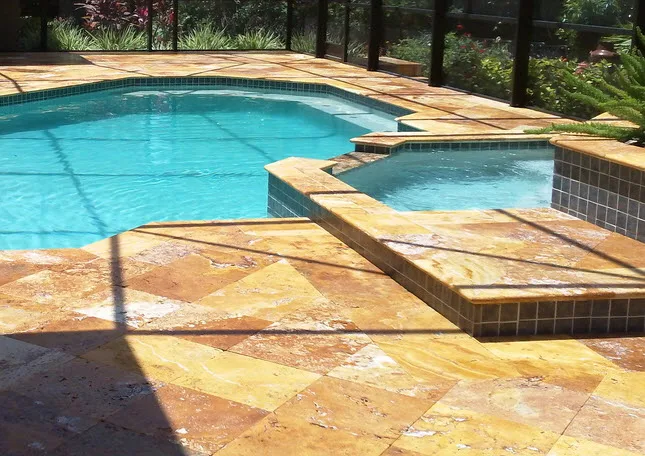
Fort Lauderdale is hard on pavers, and the sealer that protects them wears out faster here than the label on the bucket suggests.
We seal and restore pavers all over Broward County, and paver cleaning and sealing is the only thing we do. Below are the six signs we tell homeowners to watch for, plus a five-minute test you can run yourself before you ever pick up the phone.
Why Fort Lauderdale Pavers Need Resealing Sooner Than the Label Says
Sealer is a sacrificial layer. It is designed to wear down so your pavers do not. Once it is gone, the sun, rain, and salt start working on the pavers themselves.
South Florida sun runs a UV index of 7 to 10 for about six months of the year, and that ultraviolet load burns through a sealer’s UV protection roughly twice as fast as it would in a northern state (per Florida paver-sealing climate data). Add more than 50 inches of rain a year, and summer downpours scour the surface and flush sand out of the joints.
Salt air makes it worse. If you are near the beach or the Intracoastal, in neighborhoods like Harbor Beach, Rio Vista, or Coral Ridge, salt speeds up mineral migration and sealer breakdown. Pool decks get their own punishment from chlorine and constant splash-out. All of it adds up to a shorter reseal window than pavers see in a milder climate.
Sign #1: Faded, Dull, or Chalky Color

Faded, washed-out color is usually the first thing homeowners notice. UV bleaches unsealed or under-sealed pavers, and the rich tone they had on install day starts looking flat and gray.
Here is an easy way to gauge it: compare a shaded section to one in full sun, like your driveway apron or the poolside edge. If there is a big color gap between the two, the sealer on the sun-exposed area has already worn through. Faded pavers are also where our paver tinting work comes in, since we can restore color on pavers that are too far gone for sealing alone to fix.
Sign #2: Water Soaks In Instead of Beading

This is the definitive do-it-yourself test. Sprinkle some water on the pavers and watch what happens. If it beads up and sits in droplets, the sealer is still doing its job. If it soaks in and darkens the paver, the sealer has worn through.
Test in a few spots, not just one. Try the center, the edges, the sunniest section, and the most shaded section. Sealer does not wear evenly, so the sun-blasted entry to your driveway may fail while a covered patio still beads water for another year. If the test comes back dry across the board, it is worth knowing what happens when pavers go unsealed for any length of time.
Sign #3: Stains That Will Not Rinse Off

Working sealer keeps spills sitting on top of the surface, where they rinse away. When the barrier is gone, the porous paver starts drinking everything in.
Watch for oil and tire marks on driveways, organic tannin stains from leaves, rust from irrigation heads, and chemical marks around the pool. When those stop cleaning up the way they used to, the sealer has failed and the paver is absorbing the stain instead of shedding it. A thorough clean has to come before any reseal, which is why our cleaning step often takes us twice as long as a typical pressure-washing crew. Anything left behind gets sealed in permanently.
Sign #4: Joint Sand Washing Out, Weeds, and Ants

Sealer helps lock the sand in your joints. When that sand starts eroding, you will see low joints, loose sand on the surface after a storm, and then weeds and ants moving in where the sand used to be.
This is the one sign we tell people not to ignore. Empty joints let weeds and ants take hold and leave pavers free to shift. If your pavers are already moving, the cause is usually the concrete border around the edge breaking down, and that border needs repair before anything gets sealed.
Sign #5: White, Chalky Efflorescence

Efflorescence is the white, chalky residue that shows up when moisture pushes natural salts up through the paver to the surface. It is common in humid, salt-influenced Broward County, and it is usually cosmetic rather than structural.
It is still a sign worth acting on. Efflorescence tells you moisture is moving freely through an unprotected surface. It needs the right treatment to neutralize it before resealing, not just a pressure wash, or it will keep coming back.
Sign #6: Flaking, Peeling, or Cloudy Sealer

Visible sealer failure, meaning flaking, peeling, or a cloudy white haze, is one of the clearest signs a reseal is overdue. That haze is often called whiting, and it happens when moisture gets trapped under xylene or solvent-based sealers, or when a coat was applied before the pavers were bone-dry.
Here is the important part: you cannot just seal over a failing coat. The old sealer has to be stripped first, or the new finish will fail just as fast. We use only water-based sealers so whiting does not happen on our jobs, and when we inherit someone else’s cloudy sealer, our paver stripping process removes the old coating entirely before we reseal it correctly. Getting the right sealer for your pavers is a big part of why our jobs hold up.
How Often Should You Reseal Pavers in Fort Lauderdale?
For most Fort Lauderdale pavers, plan on resealing every two to three years. Coastal, full-sun, high-traffic, and pool-deck surfaces trend toward the two-year end of that range. The national guidance you will see printed on product buckets is three to five years, but that assumes a milder climate than ours, so it helps to understand how often to reseal in Fort Lauderdale specifically.
Sealer type matters too. The general-purpose sealers most homeowners and even some contractors use might only last six to eight months in our harsh South Florida environment. The commercial-grade, water-based sealers we use last two to three years and sometimes longer, up to four times the life of the cheap stuff. The gap comes down to product and prep, which shapes how long paver sealing lasts in our climate.
Reseal intervals by surface and condition in Fort Lauderdale:
| Surface / Condition | Typical Reseal Interval | Why |
|---|---|---|
| Shaded patio, light foot traffic | ~3 years | Less UV and daily wear |
| Standard driveway | ~2 to 3 years | Vehicle traffic plus sun and rain |
| Full-sun driveway apron or entry | ~2 years | Heaviest UV load, wears first |
| Pool deck (sun plus chlorine or salt splash) | ~2 years | Constant moisture and chemical exposure |
| Coastal or Intracoastal (salt air) | ~2 years | Salt speeds sealer breakdown |
| Travertine or natural stone | ~2 years or sooner | More porous, holds moisture longer |
These are general homeowner guidelines. Actual timing depends on the surface, sun exposure, traffic, prior prep, and the sealer used. For a neutral national baseline to compare against, most manufacturers cite every three to five years.
Best Time of Year to Reseal Pavers in South Florida
If you have a choice, reseal before the summer rainy season. Fresh sealer, rather than bare, worn pavers, then takes the brunt of the summer sun and downpours, and you head into the hardest months already protected. We walk through the best time of year to clean and seal in more detail if you want to plan ahead.

We do seal through the summer too, it just takes more care. Sealer locks in whatever is underneath it, so the surface has to be clean and completely dry first, and a coat caught by an afternoon storm before it cures has to be stripped and redone. We watch the radar, seal earlier in the day so coats can set, and reschedule rather than gamble when rain threatens.
How to Make Your Paver Sealer Last Longer
A little upkeep between reseals stretches the life of the coat and keeps your pavers looking new longer. None of it is complicated.
- Rinse off salt near the coast. If you are close to the beach or the Intracoastal, a periodic freshwater rinse keeps salt from sitting on the surface and breaking the sealer down early.
- Sweep debris regularly. Leaves and organic buildup trap moisture and feed mold and algae, especially in shaded areas. Keeping the surface clear slows both.
- Clean gently between jobs. A garden hose or a light rinse handles routine upkeep on a sealed surface. Deep pressure cleaning has its place before a reseal, but a high-pressure tip used for casual maintenance can wear a cured coat down faster than the weather does.
- Keep irrigation off the pavers. Sprinkler overspray and constant wetting speed up sealer wear. Aiming heads away from the hardscape helps more than people expect.
When it is time for a deeper clean, our paver cleaning service handles the buildup that a garden hose cannot, without stripping the sealer you are trying to protect. It also helps to know how often to clean your pavers so the surface never gets ahead of you.
When Your Pavers Are Past Resealing
Sometimes resealing is not the answer, and we would rather tell you that up front. If the surface is breaking off in chunks, cracked all the way through, badly settled into a trip hazard, or has deeply eroded joints, those problems need repair first.

This is also why the earlier signs are worth catching early. Faded color left too long becomes permanent, stains soak past the point of cleaning, and empty joints let pavers shift. Resealing on schedule is pennies on the dollar next to restoring or replacing pavers that were let go too far.
When repair is needed, the fix is cleaning, border repair, resetting pavers, and re-sanding as needed, then sealing. We handle that as paver restoration rather than a simple reseal, and we will never recommend a service you do not actually need.
Frequently Asked Questions
Can I reseal my pavers myself, or should I hire a professional?
You can, but almost every homeowner who has tried it tells us the same thing: never again. Results come down to prep, meaning professional-grade cleaning, the right sealer for your paver type, and the correct amount applied. A rushed coat over a dirty or damp surface is the number one cause of cloudy, short-lived results down here. We break down doing it yourself versus hiring a pro if you are weighing the two.
How much does paver resealing cost in Fort Lauderdale?
It depends on the size of the job, the difficulty, and the type of sealer, so we give a free, no-obligation on-site estimate. Our minimum charge for a cleaning and sealing job is $795. Either way, sealing your pavers is pennies on the dollar compared to replacing them, and you can see what paver sealing costs here before you call.
Will resealing make my pool deck slippery?
Done right, no. Travertine and natural stone can get slick when wet, so our sealers contain a non-slip agent to prevent exactly that. Ask for the anti-slip finish on any pool deck and it should not be slippery.
Will sealing keep the weeds from coming back for good?
It helps, but let’s be honest, they eventually come back. Life finds a way, especially weeds and ants. Sealing, and sanding the joints when you want it, slows regrowth, but no seal job stops it forever.
See the Signs? Let’s Take a Look
If you are spotting any of these six signs, your sealer has done its job and it is time to reseal before the damage compounds. Not sure whether yours is truly due? We will give you an honest read, no pressure. Call us at (954) 727-6809 or request a free estimate, and we will take a look at your pavers here in Fort Lauderdale, Broward County, or Southern Palm Beach County.